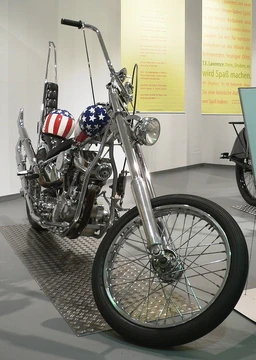
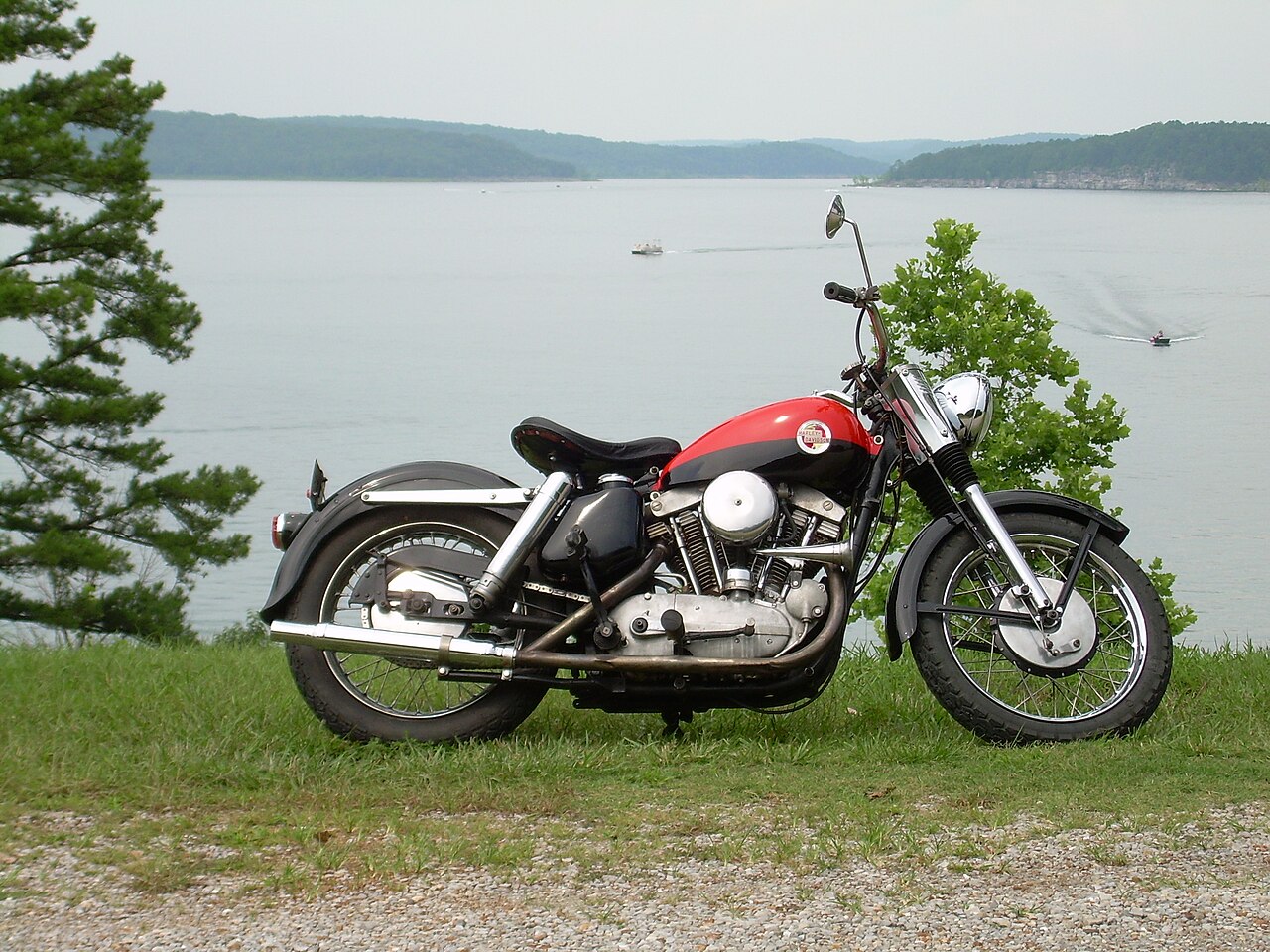
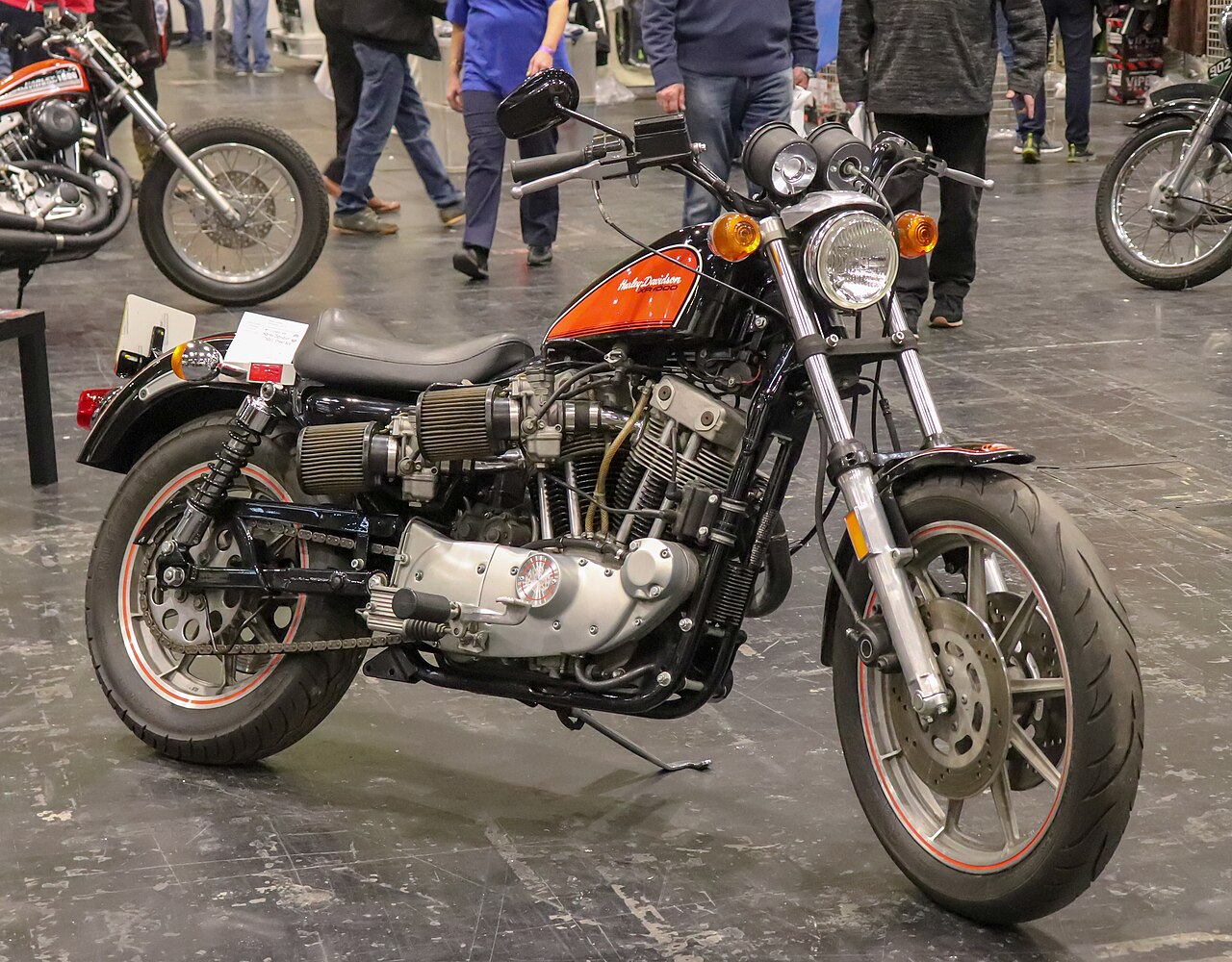
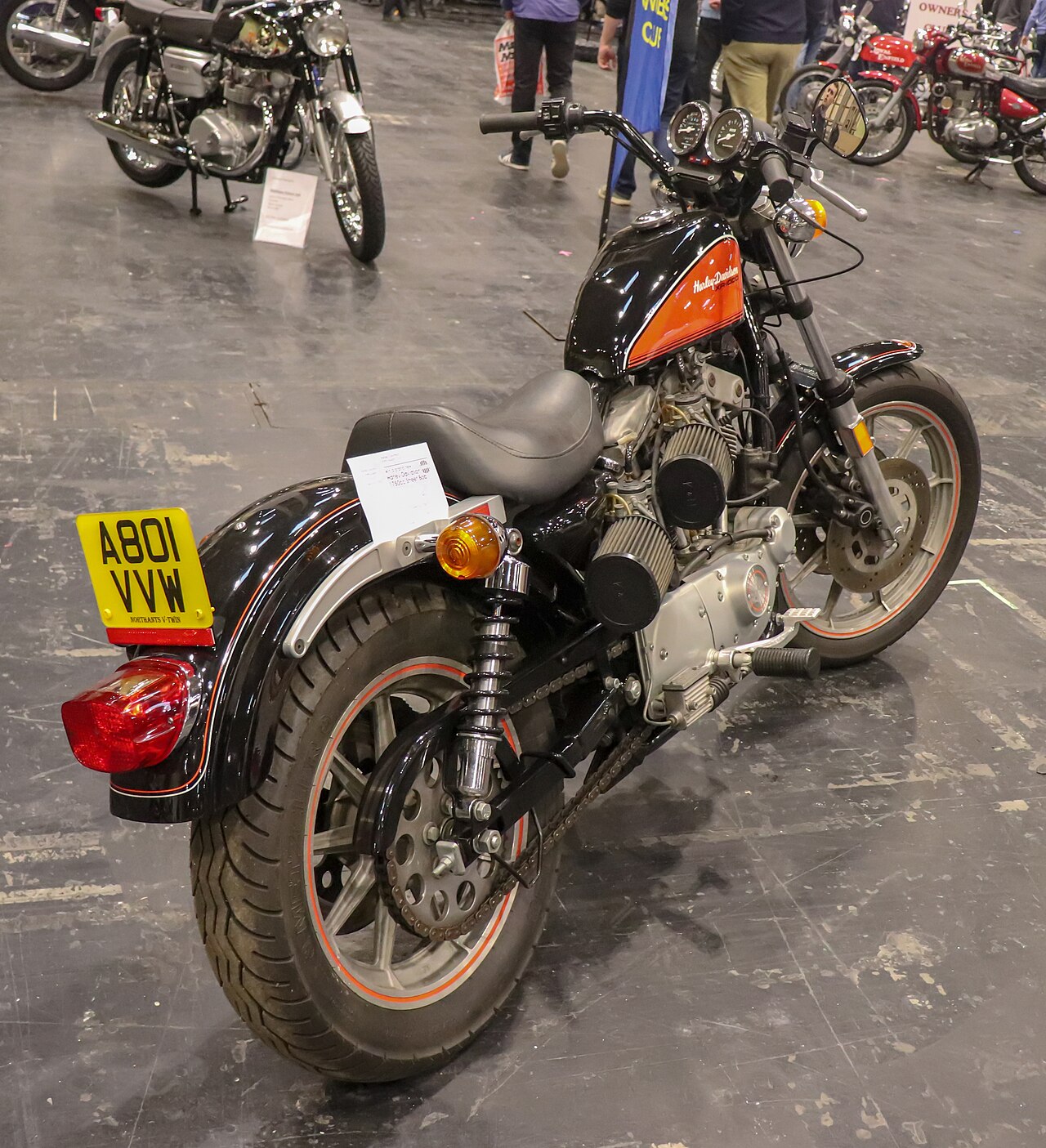
Harley-Davidson Sportster

via Wikipedia: Harley-Davidson · see source
Sportster models are designated in Harley-Davidson's product code by beginning with "XL".
- Engine type
- Four-stroke, 45° V-twin, overhead valve (Ironhead and Evolution)
Lore & Background
Sportster engines retained the K/KH design crankcase, with the transmission contained in the same casting as the engine, driven by a triple-row #35 chain primary drive and a multi-plate cable-operated clutch.
Reader's Guide
It introduced the overhead valve engine to Harley-Davidson's small twin line, replacing the earlier side-valve K models. The Sportster's engine design, with its 45° V-twin and fork-and-blade connecting rods, influenced later models.
Did You Know?
- The Model K was the first civilian Harley-Davidson with hydraulic shock absorbers on both wheels.
The Backyard Origins
Harley drafted plans for a 7.07-cubic-inch engine with four-inch flywheels, designed to mount on a regular pedal-bicycle frame. Over the next two years, he and childhood friend Arthur Davidson built the motor-bicycle in a machine shop at their friend Henry Melk's home. The trio wrote it off as a valuable experiment and immediately began a second, more ambitious design. Outboard-motor pioneer Ole Evinrude, then building gas engines on Milwaukee's Lake Street, lent his expertise. The prototype was assembled in a ten-by-fifteen-foot shed in the Davidson backyard, with many parts fabricated at the West Milwaukee railshops where eldest brother William A. Davidson worked as toolroom foreman.
Scaling Up: Factories, Production, and Racing Supremacy
The company's physical footprint and output grew at a remarkable pace during its first decade. The initial plant was a modest forty-by-sixty-foot single-story wooden building that produced roughly fifty motorcycles that year. William A. Davidson left his position as tool foreman at the Milwaukee Road railroad to join the venture full-time, and the company began selling to police departments, a market segment that would remain important for decades. The yellow brick plant was eventually demolished and replaced by a five-story structure spanning two blocks along Juneau Avenue and 38th Street.
A Brand That Outlived the Motorcycle
Harley-Davidson's identity extends far beyond the machines it builds. Over more than a century, it has weathered shifting ownership structures, periods of financial strain and quality concerns, and fierce global competition, yet it has cultivated one of the most devoted customer followings in any industry. Owner clubs and brand events operate worldwide, and the company maintains a dedicated, brand-focused museum. Manufacturing spans five plants across the United States, Brazil, and Thailand. The brand also licenses a vast merchandise ecosystem including apparel, home décor, accessories, toys, scale models, and video games, transforming a motorcycle company into a global lifestyle institution.
Common Misconceptions (Editorial)
Some mistakenly think the Sportster’s engine design was entirely new, but it actually retained the K/KH design crankcase with the transmission housed in the same casting. Others assume the transmission was chain-driven like the final drive, but the triple-row #35 chain primary drive was specific to the engine-transmission unit and used a multi-plate cable-operated clutch.
Why It Matters (Editorial)
The Harley-Davidson Sportster endures because its rugged, simple V-twin architecture and shared engine-transmission case harken back to the brand’s post-war engineering DNA. It offers riders a direct, visceral connection to motorcycling’s mechanical heritage—a machine that feels both timeless and accessible to hobbyists and purists alike.
Gallery
More in Iconic Motorcycles 1-20
Spotted an error? Know more?
This is a living reference — every entry is fact-audited, and reader corrections feed straight into our audit queue. Suggest an edit · See this site's audit record