Suzuki Hayabusa
A sports motorcycle that set the production speed record.

via Wikipedia: Suzuki · see source
Its name is Japanese for 'peregrine falcon,' reflecting its intent to surpass the Honda CBR1100XX Super Blackbird as the fastest production motorcycle.
- Manufacturer
- Suzuki
Lore & Background
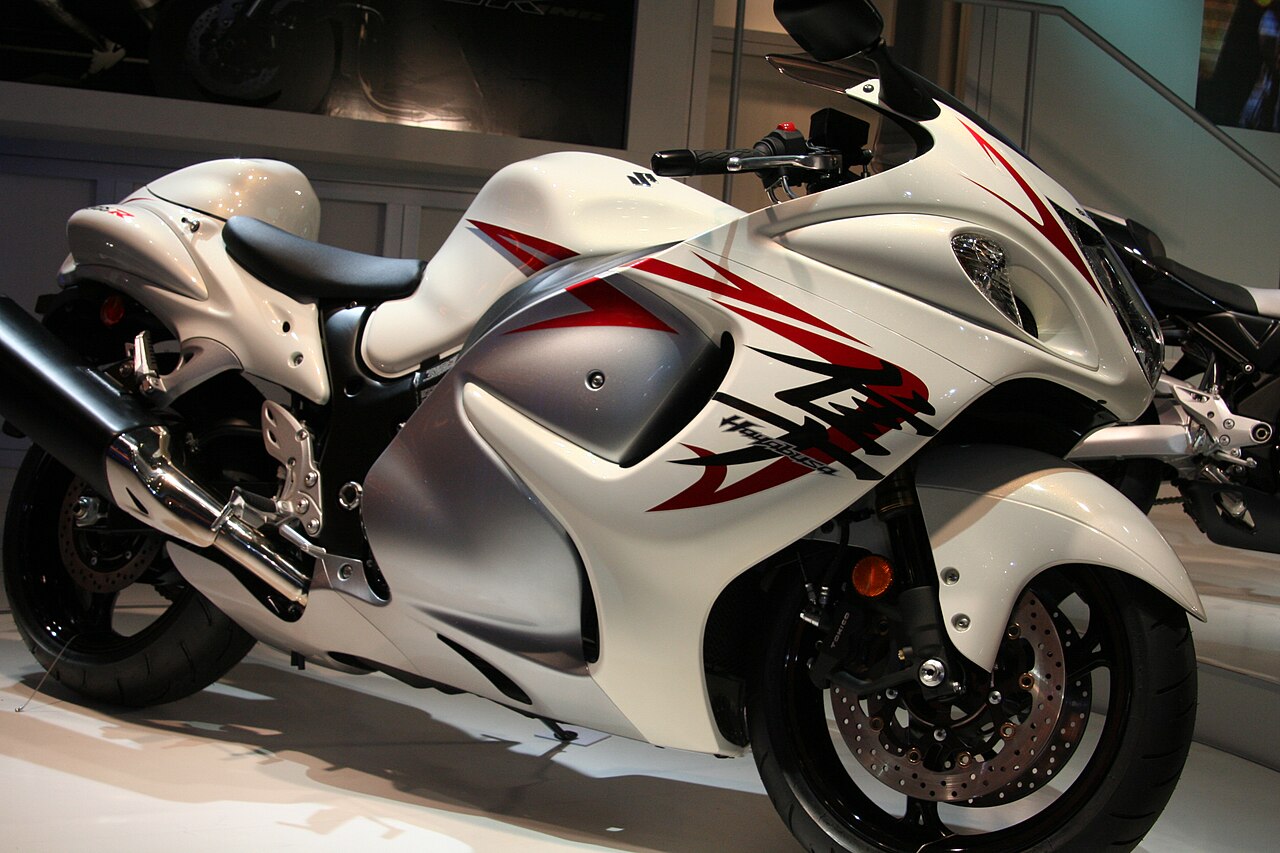
The design, created by Suzuki's Koji Yoshiura, was intentionally 'grotesque' to make a strong initial impact, with a bulbous bodywork shaped to reduce extreme drag at high speeds. The engine was solidly mounted to increase chassis rigidity. Reviewers lauded its all-round performance, noting it did not drastically compromise handling, comfort, or reliability for speed. A hesitation at low speeds was noted, possibly related to poor low-rpm mapping.
Reader's Guide
The Suzuki Hayabusa's significance lies in its role as the fastest production motorcycle of its era, a title it secured by surpassing the Honda CBR1100XX by a substantial margin. Beyond speed, the Hayabusa was praised for balanced performance, offering strong acceleration, handling, and comfort. Its controversial styling, driven by aerodynamic necessity, became iconic. The bike's legacy includes influencing subsequent hyper sport designs and demonstrating that a motorcycle could achieve extreme speed without entirely sacrificing other qualities.
Did You Know?
- The Hayabusa's name means 'peregrine falcon' in Japanese, chosen because the falcon preys on blackbirds, reflecting the intent to unseat the Honda CBR1100XX Super Blackbird.
From Looms to Legend: The Hayabusa in Suzuki's Motorcycle Lineage
Michio Suzuki founded the Suzuki Loom Works in Hamamatsu, and for three decades the company's entire output was weaving machinery for Japan's silk industry. Within two years the factory was churning out six thousand motorcycles every month, and the company had rebranded as Suzuki Motor Co., Ltd. Over the following decades the brand shed its two-stroke identity and built a reputation that, as the corporate timeline notes, would eventually be defined by the Hayabusa and the GSX-R family. Today Suzuki ranks as the third-largest domestic motorcycle seller in Japan and is credited with dominating racetracks worldwide, a legacy in which the Hayabusa sits at the apex of performance.
Engineering DNA: The Innovations That Shaped the Brand
That early machine featured a cast aluminium crankcase and gearbox—materials and construction choices signaling a commitment to lightweight, efficient design well ahead of its time. The new democratic government's patent office even granted Suzuki a financial subsidy to continue motorcycle research, validating the company's technical direction. The corporate timeline makes clear that before Suzuki became synonymous with the Hayabusa and GSX-R, it was first known for two-stroke engines in both motorcycles and automobiles. The transition from those simpler powerplants to the high-performance machines that dominate racetracks around the world represents a continuous thread of mechanical ambition running through more than a century of product development.
Global Footprint: The Infrastructure Behind a World Icon
The Hayabusa is not merely a Japanese product; it is the output of a multinational mobility manufacturer whose manufacturing and distribution network spans the globe. Suzuki operates thirty-five production facilities across twenty-three countries and maintains one hundred thirty-three distributors in one hundred ninety-two countries. Its automobile sales volume places it tenth globally, while domestically in Japan it holds the third-largest position for both cars and motorcycles. This vast infrastructure—spanning automobiles, motorcycles, all-terrain vehicles, outboard marine engines, wheelchairs, and small internal combustion engines—gives the brand the scale to develop, produce, and support a flagship performance motorcycle like the Hayabusa. Yet the motorcycle division, with the Hayabusa as its performance crown jewel, remains a central pillar of Suzuki's identity across its remaining markets.
Leadership and Legacy: The People Behind the Machine
The corporate stewardship that produced the Hayabusa spans generations of a single family's influence. Remarkably, he was the fourth adopted son-in-law in a row to run the company, a pattern speaking to a particular culture of succession. Through all of this, the engineering culture that produced the Hayabusa persisted, carried forward by a leadership lineage that treated the brand's performance heritage as non-negotiable.
Common Misconceptions (Editorial)
Some assume the Hayabusa’s "grotesque" design was purely aesthetic or an oversight, but it was intentionally shaped to reduce drag at high speeds. Others believe its focus on top speed came at the cost of handling, comfort, or reliability, yet reviewers noted it did not drastically compromise those qualities. Additionally, the name is not merely a random animal reference—it specifically refers to the peregrine falcon, chosen because the falcon preys on blackbirds, reflecting the intent to surpass Honda’s Super Blackbird.
Why It Matters (Editorial)
The Suzuki Hayabusa endures as a landmark in motorcycling because it proved that extreme speed did not have to sacrifice all-around usability. By balancing a record-breaking top speed with competent handling and reliability, it set a benchmark that forced competitors to rethink what a production supersport could be. Its iconic, almost polarizing design and the daring narrative of chasing the "Blackbird" also cemented its place in pop culture and motorcycle history.
Gallery
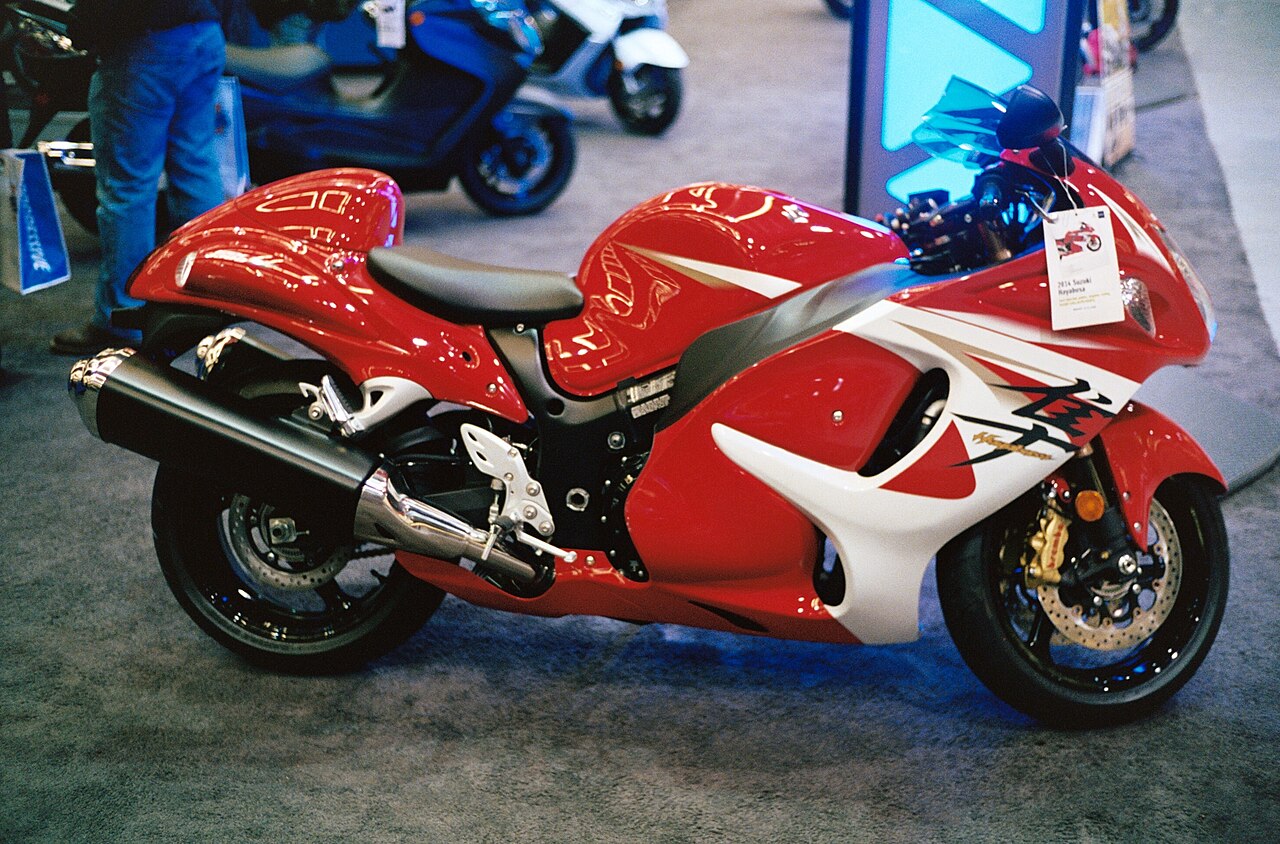
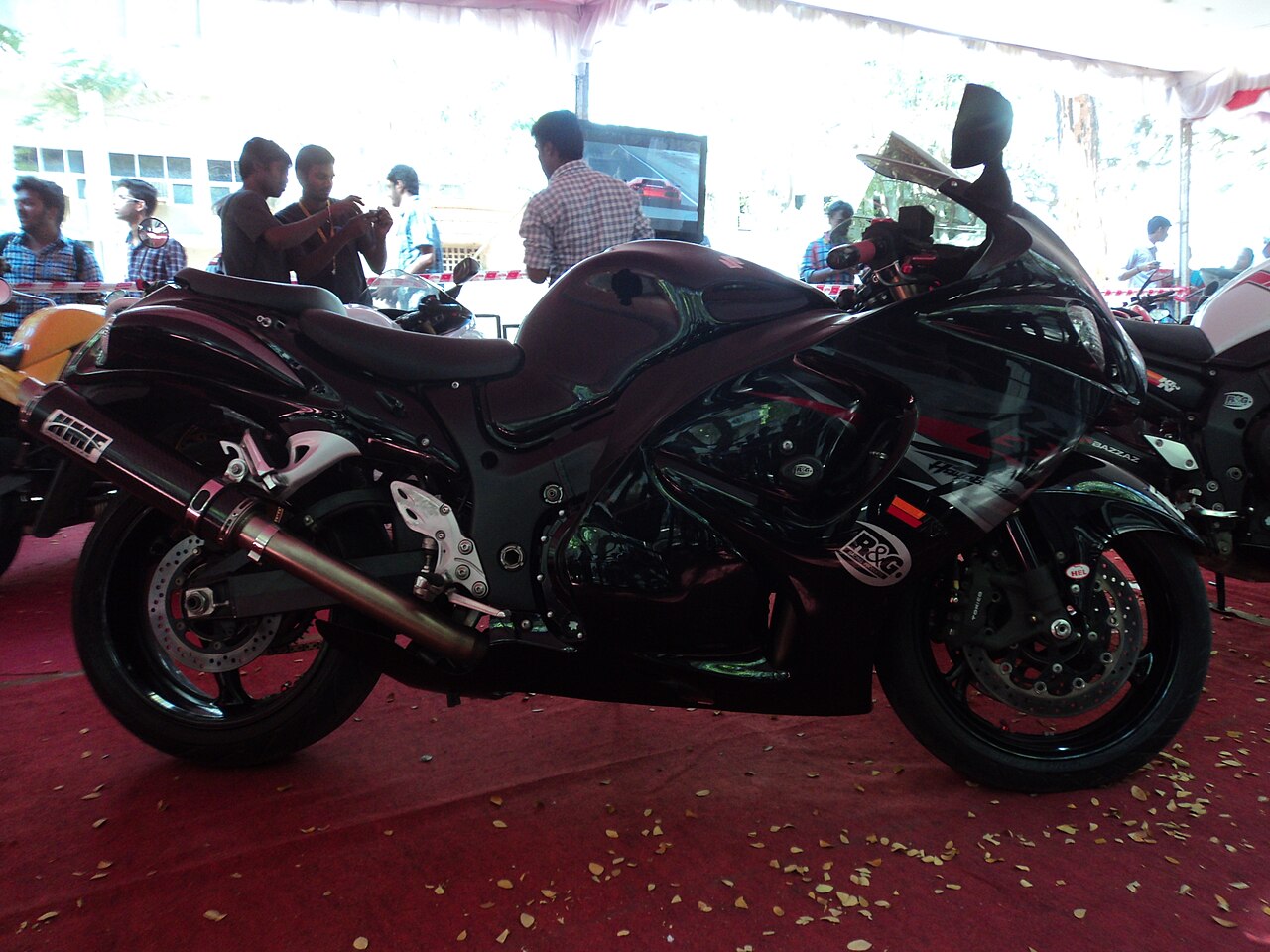
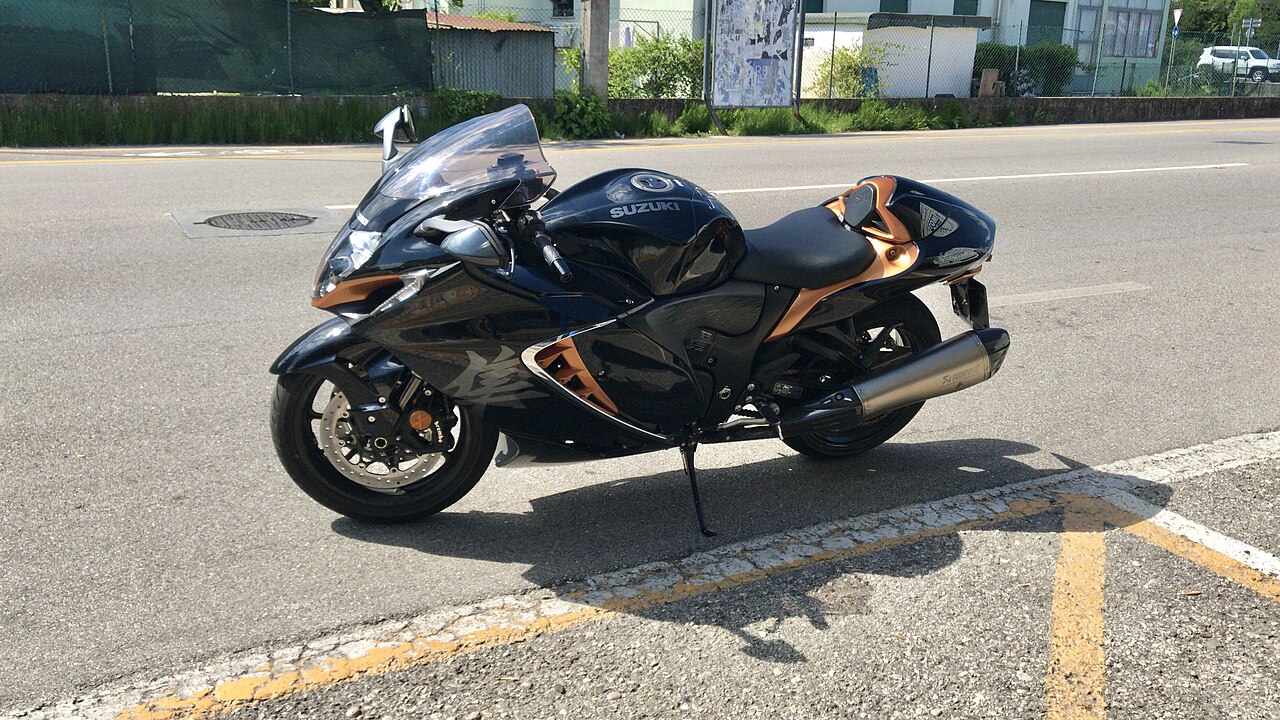
Frequently Asked Questions
Why is Suzuki Hayabusa important?
The Hayabusa was built specifically to dethrone the Honda CBR1100XX Super Blackbird as the fastest production motorcycle, and it succeeded the moment it hit the market. Its cultural footprint stretches well beyond spec sheets, making it one of the most recognized names in two-wheeled performance history.
More in Iconic Motorcycles 1-20
Spotted an error? Know more?
This is a living reference — every entry is fact-audited, and reader corrections feed straight into our audit queue. Suggest an edit · See this site's audit record