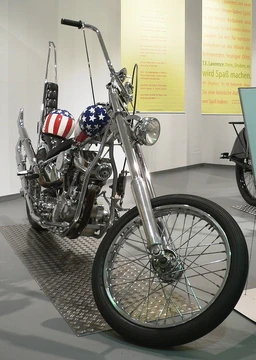
Royal Enfield Bullet
Longest continuously produced motorcycle since 1932.

via Wikipedia: Royal Enfield Bullet · see source
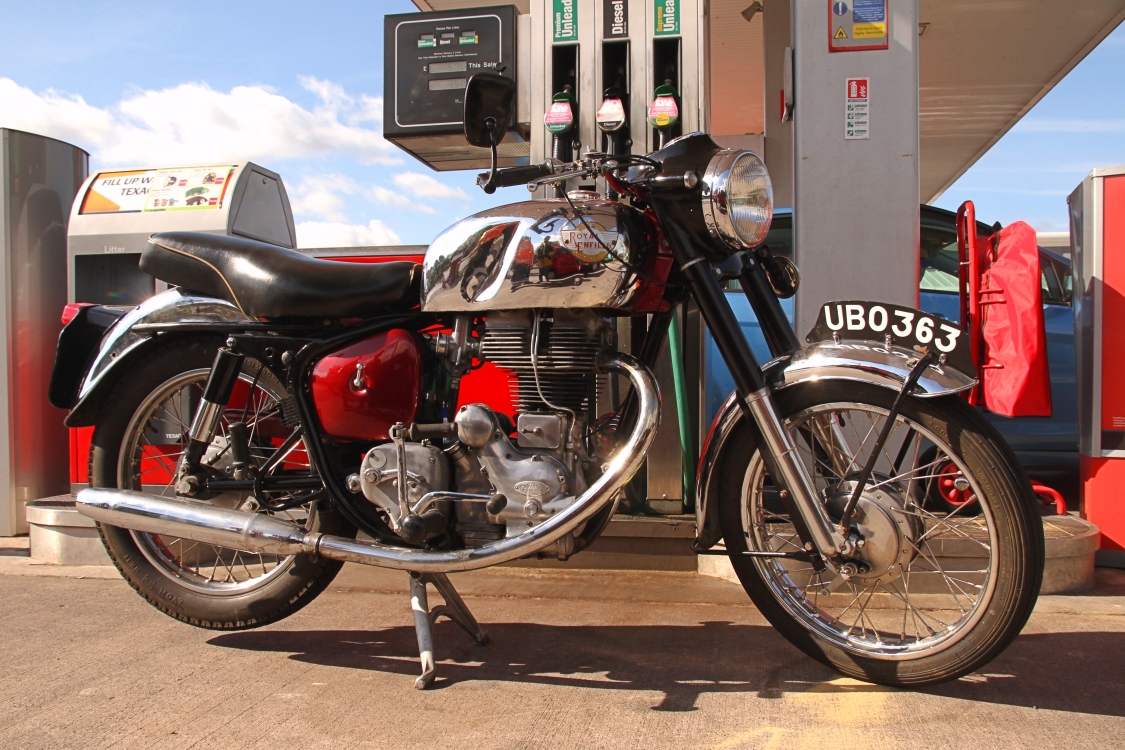
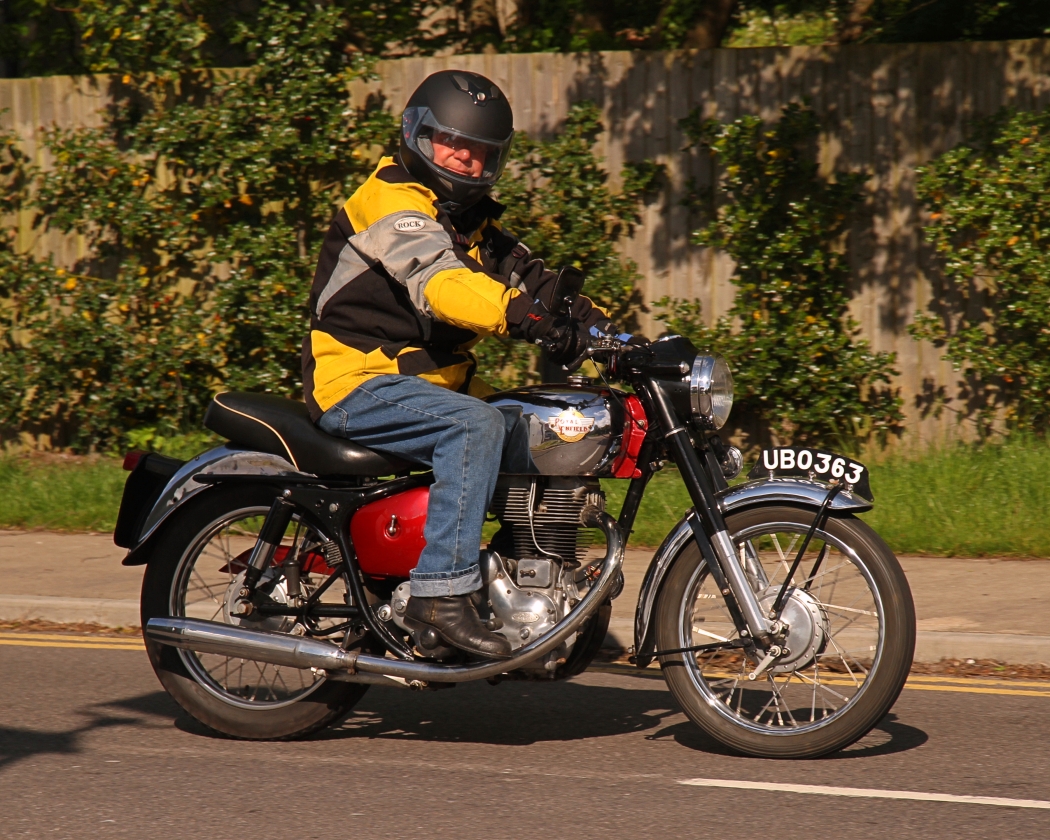
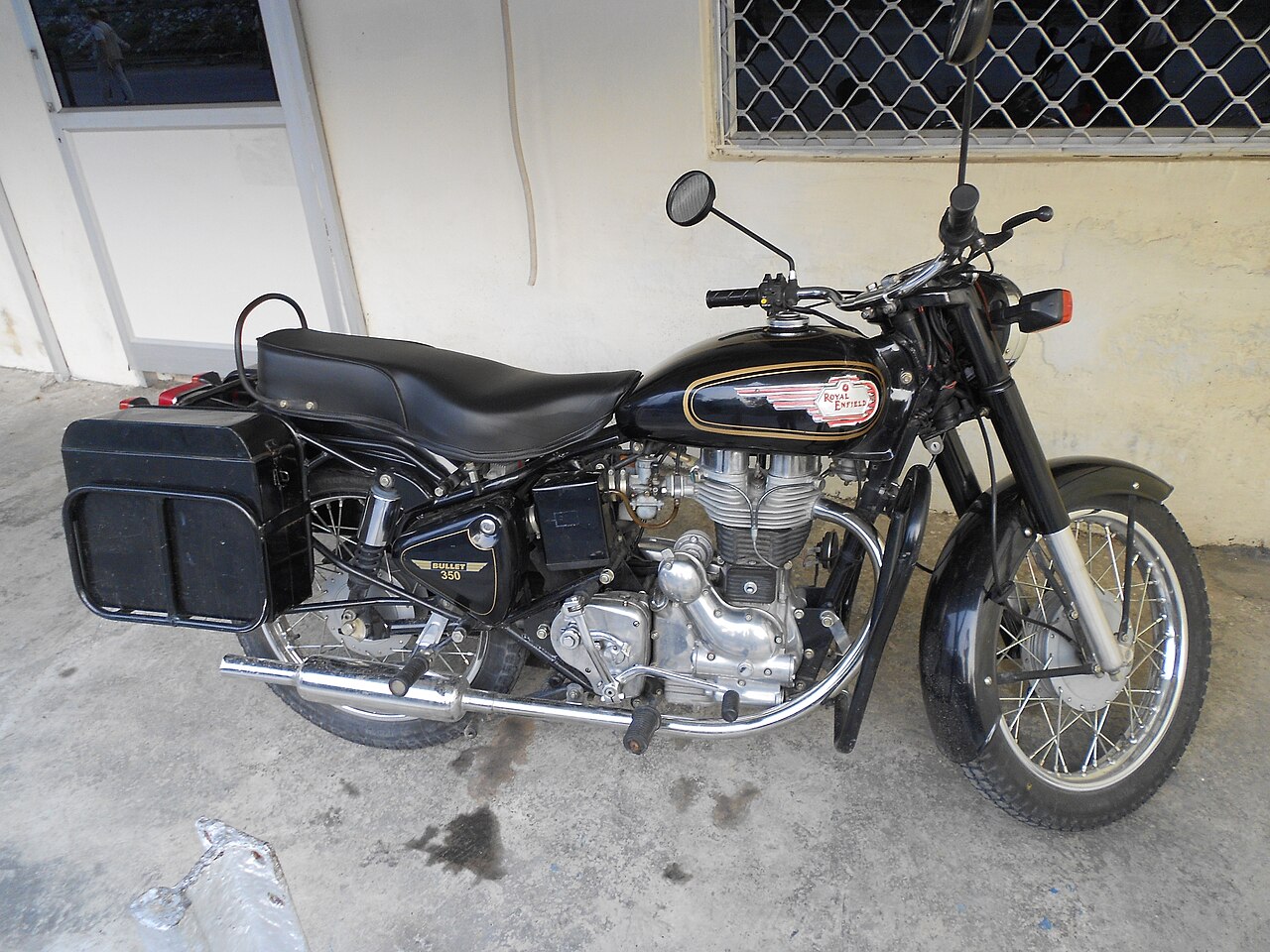
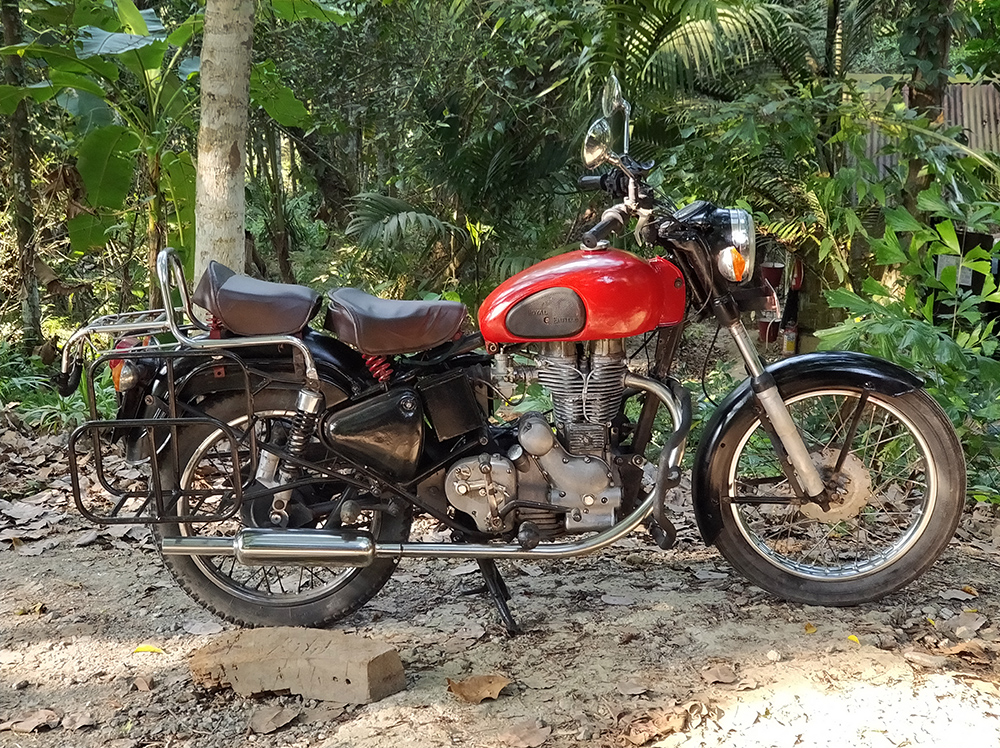
The Royal Enfield Bullet is an overhead valve, single-cylinder, four-stroke motorcycle initially made by Royal Enfield in Redditch, Worcestershire, England. It is now produced by Royal Enfield at Chennai, Tamil Nadu, India, a company originally founded by Madras Motors to build Royal Enfield motorcycles under licence in India. The Royal Enfield Bullet has the longest and unchanged production run of any motorcycle, having remained continuously in production since 1932. The Bullet marque is even older and has passed 75 years of continuous production.
- First produced
- 1932
- Country of origin
- United Kingdom (originally); India (currently)
- Engine type
- Overhead valve, single-cylinder, four-stroke
- Displacements
- 250 cc, 350 cc, 500 cc
- Known for
- Longest continuous production run of any motorcycle since 1932
Verified Timeline
Lore & Background
Introduced in 1932 as a four-stroke single-cylinder motorcycle, the Bullet was the first model to feature the Bullet name. It had an inclined engine with exposed valve gear and four valves per cylinder, available in 350 cc and 500 cc options, with a 250 cc option added in 1933. Its frame featured centre-spring girder front forks and a rigid rear-end with a sprung seat. After competition success, the 350 cc Bullet was bought by the British Army for dispatch riders, and 3,000 were supplied to the RAF during the Second World War. The 1939–1949 models introduced two rocker boxes and an aluminium cylinder head, and post-war models incorporated hydraulic front forks and a swing-arm rear suspension. The 1949–1956 model featured a vertical engine with an alloy head, higher compression, a fully sprung frame with telescopic forks, and a dual seat. A 499 cc model debuted in 1953. In 1949, the Indian Army ordered Bullets for border patrol, leading to a factory in Madras. By 1955, 350 cc Bullets were sent as kits for assembly in India, and Enfield India Ltd. soon produced complete motorcycles independently. The 1955 model remained almost unchanged for years, with over 20,000 Bullets produced annually in Madras.
Reader's Guide
The Royal Enfield Bullet's significance lies in its status as the longest continuously produced motorcycle, with production spanning from 1932 to the present day. Originally a British design, it became a staple of Indian military and civilian use after the Indian Army ordered Bullets in 1949. The Indian arm, Enfield India Ltd., continued production of the 1955 design almost unchanged, re-introducing it to the British market in 1977. This period of stagnation ended when Eicher Motors bought the near-bankrupt company in the 1990s, leading to a trademark lawsuit that secured the Royal Enfield name and major investment. The Bullet's legacy includes its iconic sprung-seat look, its use in trials competitions (including wins at the International Six Days Trial and Scottish Six Days Trial), and its role as a classic British bike in India, known as the Raja Gaadi. The divergence of British and Indian production lines after 1955, with the British line introducing models like the Airflow and the rare 'New Bullet' unit-construction bikes, adds to its historical complexity.
Did You Know?
- The Bullet's name and the Royal Enfield brand derive from the British company's role as a subcontractor to the Royal Small Arms Factory in Enfield, London.
- In 1952, Johnny Brittain won the Scottish Six Days Trial on a Royal Enfield Bullet, and in 1953 he won the International Six Days Trial without losing a single point.
- Between 1963 and 1965, only about 250 'New Bullet' unit-construction bikes were produced at the Redditch factory, making them scarce and desirable today.
- The 1955 Bullet design remained almost unchanged for decades in India, with over 20,000 Bullets produced annually in Madras.
- The British and Indian production lines diverged permanently after 1955 because the Indian arm was committed to supplying the Indian Army and did not adopt the UK's modernisations.
A Century of Unbroken Production
The Royal Enfield Bullet holds a distinction few machines can claim: it has remained in continuous production since 1932, making it the longest-running, unchanged motorcycle production run in the world. The Bullet name itself stretches back even further, crossing the 75-year mark of unbroken manufacturing. What began as a four-stroke, single-cylinder, overhead-valve motorcycle built in Redditch, Worcestershire, England, now rolls out of a Chennai, Tamil Nadu plant. That Indian operation traces its roots to Madras Motors, a company originally established to build Royal Enfield motorcycles under licence. The brand name carries a military lineage, derived from the British parent company's role as a subcontractor to the Royal Small Arms Factory in Enfield, London. From that modest origin, the Bullet grew into a global icon whose production line has never truly stopped, even as the factory floor shifted continents.
From Exposed Valves to Electronic Injection
The Bullet's mechanical heart has undergone a remarkable transformation while keeping its single-cylinder, four-stroke identity. The 1932 original featured an inclined engine with exposed valve gear and four valves per cylinder, available in 350 cc and 500 cc displacements, with a 250 cc variant added in 1933. By the 1939 refresh, the engine gained two rocker boxes that improved volumetric efficiency, and post-war models brought an aluminium cylinder head. The 1949 redesign stood the engine vertically, added higher compression, and paired it with a fully sprung swing-arm frame using non-adjustable hydraulic shockers at the rear and a new telescopic front fork of Royal Enfield's own design. Power still flowed through the four-speed Albion gearbox, which included a distinctive neutral-finder lever allowing the rider to drop into neutral from any gear except first. The crankshaft retained a fully floating big-end bearing throughout. Today, that exposed-valve architecture has given way to an all-alloy unit construction engine with electronic fuel-injection, a quiet revolution spanning nine decades.
Dispatch Riders, Gold Medals, and Border Patrols
The Bullet earned its reputation not only on the road but in the service of nations and on the trial field. After competitive success, the British Army purchased the 350 cc model for dispatch riders, and during the Second World War an additional 3,000 units were supplied to the Royal Air Force. The motorcycle's trial pedigree was equally impressive: the prototype performed well in a performance trial, and the model went on to win the trophy at the 1948 International Six Days Trial, with two Bullet riders taking gold medals. In 1952, Johnny Brittain claimed victory at the Scottish Six Days Trial on a Bullet, and the following year he swept the International Six Days Trial without dropping a single point. The bike's military utility extended to the Indian subcontinent as well. In 1949, the Indian Army ordered Bullets for border patrol duty, a contract that prompted Royal Enfield to open a factory in Madras. By 1955, 350 cc Bullets were being shipped from Redditch in kit form for Indian assembly, before the Chennai plant began producing complete motorcycles independently under licence, eventually churning out more than 20,000 units a year.
The Great Divergence and the End of Redditch
In 1955, Royal Enfield undertook retooling and redesign at its Redditch plant to modernise the Bullet, and by 1959 gear ratios were adjusted. Yet the Indian operation, bound by its commitment to supply the Indian Army, did not adopt those changes, and the British and Indian production lines diverged permanently, never to converge again. The British line continued to branch out: between 1956 and 1960 it offered a 350 cc Trials works-replica, a Clipper model, and in 1958 the Airflow version, which wrapped the machine in a large fibreglass fairing with panniers, developed in partnership with British Plastics. Technical updates included alternator charging in 1956 and coil ignition in 1960. The 500 cc variant was dropped in 1961. Between 1963 and 1965, roughly 250 unit-construction New Bullets were built in five batches of fifty, essentially 350 Crusaders fitted with a built-up crank and traditional Bullet bore and stroke. The UK company was sold in 1962, the Redditch factory closed in 1967, and Royal Enfield shut down entirely in 1970. Meanwhile, in Chennai, the Bullet simply kept rolling.
Common Misconceptions (Editorial)
- Some believe the Royal Enfield Bullet began production in India, but it was first made in Redditch, England, in 1932, with Indian production starting later under license. - It is often thought the Bullet’s design remained unchanged from the start, but the facts show significant evolution: early models had an inclined engine and exposed valve gear, while post-war models introduced vertical engines, alloy heads, telescopic forks, and swing-arm rear suspension. - A common misconception is that the “New Bullet” unit-construction model was mass-produced; in fact, only about 250 were made between 1963 and 1965, making them rare.
Why It Matters (Editorial)
The Royal Enfield Bullet endures because it represents an unbroken link to motorcycling’s early engineering era, with a production run spanning over 90 years. Its story—from British military dispatch work to Indian Army patrols and mass production in Chennai—illustrates how a simple, robust design can outlast wars, corporate shifts, and continents, becoming a cultural touchstone for riders worldwide.
Gallery
Frequently Asked Questions
What is the Royal Enfield Bullet?
It is a single-cylinder, four-stroke motorcycle with an overhead valve engine, originally hand-built in Redditch, England, and now assembled in Chennai, India. It has been a cornerstone of Royal Enfield's catalogue for well over nine decades.
Why is the Royal Enfield Bullet so famous?
It holds the record for the longest unbroken production run of any motorcycle ever made, having been built without a single year of interruption since 1932. That nearly century of continuous manufacturing sets it apart from every other bike in history.
Where is the Royal Enfield Bullet manufactured today?
While the original bikes came off the line in Redditch, Worcestershire, England, current production takes place in Chennai, Tamil Nadu, India. The Indian operation descends from Madras Motors, which was established to build Royal Enfield machines under licence.
What engine does the Royal Enfield Bullet use?
The Bullet is powered by an overhead valve, single-cylinder, four-stroke engine offered in 250 cc, 350 cc, and 500 cc displacements. This straightforward, durable powerplant has been the model's defining trait since its 1932 debut.
How long has the Royal Enfield Bullet been in continuous production?
Since 1932 the Bullet has never been taken off the production line, giving it more than 90 years of unbroken manufacturing. No other motorcycle in the world can match that stretch of continuous output.
More in Iconic Motorcycles 1-20
Spotted an error? Know more?
This is a living reference — every entry is fact-audited, and reader corrections feed straight into our audit queue. Suggest an edit · See this site's audit record