Honda Gold Wing
Honda's touring motorcycle series with shaft drive and flat engine.

via Wikipedia: Honda Gold Wing · see source
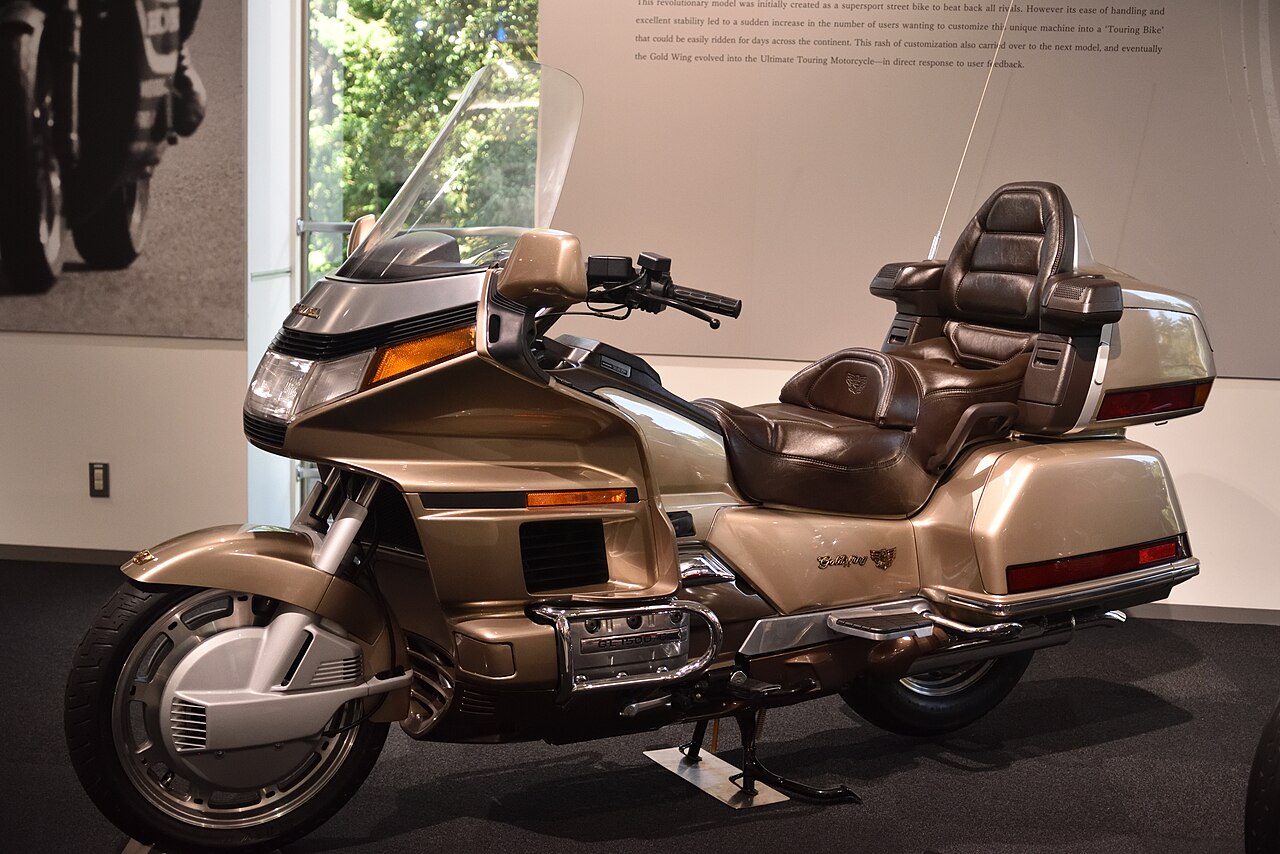
The Honda Gold Wing is a series of touring motorcycles manufactured by Honda, first introduced at the Cologne Motorcycle Show in October 1974. Characterized by press in September 1974 as 'The world's biggest motorcycle manufacturer's first attack on the over-750cc capacity market,' the Gold Wing became a landmark in long-distance motorcycling, with total sales exceeding 640,000 units, most in the U.S. market.
- field
- Motorcycle manufacturing
- nationality
- Japanese
- known_for
- Touring motorcycles with shaft drive and flat engine
- first_model_year
- 1975
- total_sales
- More than 640,000
- assembly_location
- Marysville, Ohio (1980–2010); Kumamoto Prefecture, Japan (from 2011)
Verified Timeline
Lore & Background
The Gold Wing's development began in 1972 after the success of the CB750, with an R&D design team led by Shoichiro Irimajiri, who had designed Honda's multi-cylinder Grand Prix engines and Formula One V12 engine. An experimental prototype code-named 'M1' featured a 1470cc liquid-cooled flat-six engine and shaft drive, but the production model, Project 371, used a compact 999 cc flat-four engine. The Gold Wing was the first Japanese production motorcycle with a water-cooled four-stroke engine. The first generation GL1000 (1975) had an electric starter with a kick start lever, a dummy fuel tank housing components, and the real fuel tank under the seat. It was initially sold without a fairing or luggage, creating an aftermarket opportunity. Over time, the Gold Wing underwent many design changes, growing from a 999 cc flat-four to a 1,832 cc flat-six by 2001. The 2012 model included anti-lock braking, cruise control, an optional airbag, and a six-speaker audio system.
Reader's Guide
The Honda Gold Wing's significance lies in its creation of a new market segment for long-distance touring motorcycles in North America. Honda originally envisioned it as a large sport motorcycle, but after learning customers were 'piling miles on touring,' they redesigned it for comfort, wind protection, and low maintenance. The Gold Wing targeted American riders who were not likely to buy Harley-Davidson or BMW but wanted a reliable, smooth, and torquey machine. Its shaft drive and flat engine became hallmarks, and it faced competition from Harley-Davidson, Moto Guzzi, and BMW. The Gold Wing's legacy includes being named a Landmark of Japanese Automotive Technology by the Society of Automotive Engineers of Japan and appearing eighteen times in Cycle World's Ten Best bikes list through 2012. No other touring bike has achieved its popularity, though other manufacturers build touring bikes.
Did You Know?
- The Gold Wing was the first Japanese production motorcycle with a water-cooled four-stroke engine.
- The 1974 GL1000 is recognized by the Society of Automotive Engineers of Japan as one of their 240 Landmarks of Japanese Automotive Technology.
- Through 2012, Honda GL models appeared eighteen times in Cycle World's list of Ten Best bikes.
- No Gold Wings were produced for the 2011 model year; production resumed in Kumamoto Prefecture, Japan using tooling transported from the American factory.
- The original GL1000 had a kick start lever stored inside a dummy fuel tank, which also housed the radiator expansion tank and electrical components.
Birth of a Flagship
In 1972, riding the momentum of the CB750's triumph, Honda convened a research and design team to conceive a new flagship motorcycle. The project was spearheaded by Shoichiro Irimajiri, an engineer who had previously shaped Honda's multi-cylinder Grand Prix engines and their Formula One V12. The team departed from company convention by building an experimental prototype code-named M1, featuring a longitudinal engine layout suited to shaft drive rather than the standard transverse arrangement with chain final drive. The M1 carried a 1,470 cc liquid-cooled flat-six engine—double the CB750's displacement—yet was tuned for broad torque output and 80 horsepower rather than outright speed. Though the M1 was never destined for production, its low center of gravity and distinctive traits foreshadowed the GL1000. The team ultimately opted for a more compact one-liter flat-four, and Toshio Nozue, a veteran of CB750 development, assumed project leadership under the code name Project 371.
Carving a New Market
Honda originally conceived the Gold Wing as a large sport motorcycle, but market research revealed that riders were accumulating serious touring distances. The company pivoted, recognizing that the primary buyer was the long-distance motorcyclist. In early-1970s America, that rider faced a narrow field: Harley-Davidson's Electra Glide with its devoted following, Moto Guzzi's 850 cc Eldorado, or BMW's smoother but pricier machines. Other Japanese bikes such as the CB750 and Kawasaki Z1 were affordable yet ill-suited for touring due to small fuel tanks and maintenance-heavy rear drive-chains. The Gold Wing targeted a newly emerging segment: the American long-distance rider who would not gravitate toward a Harley or BMW but would invest in a reliable, comfortable, low-maintenance machine with a smooth, torquey, quiet engine. The secondary target was Europe, where riders valued handling and performance over luxury—a demand that later spawned the separate Honda Pan European.
Engineering That Redefined Touring
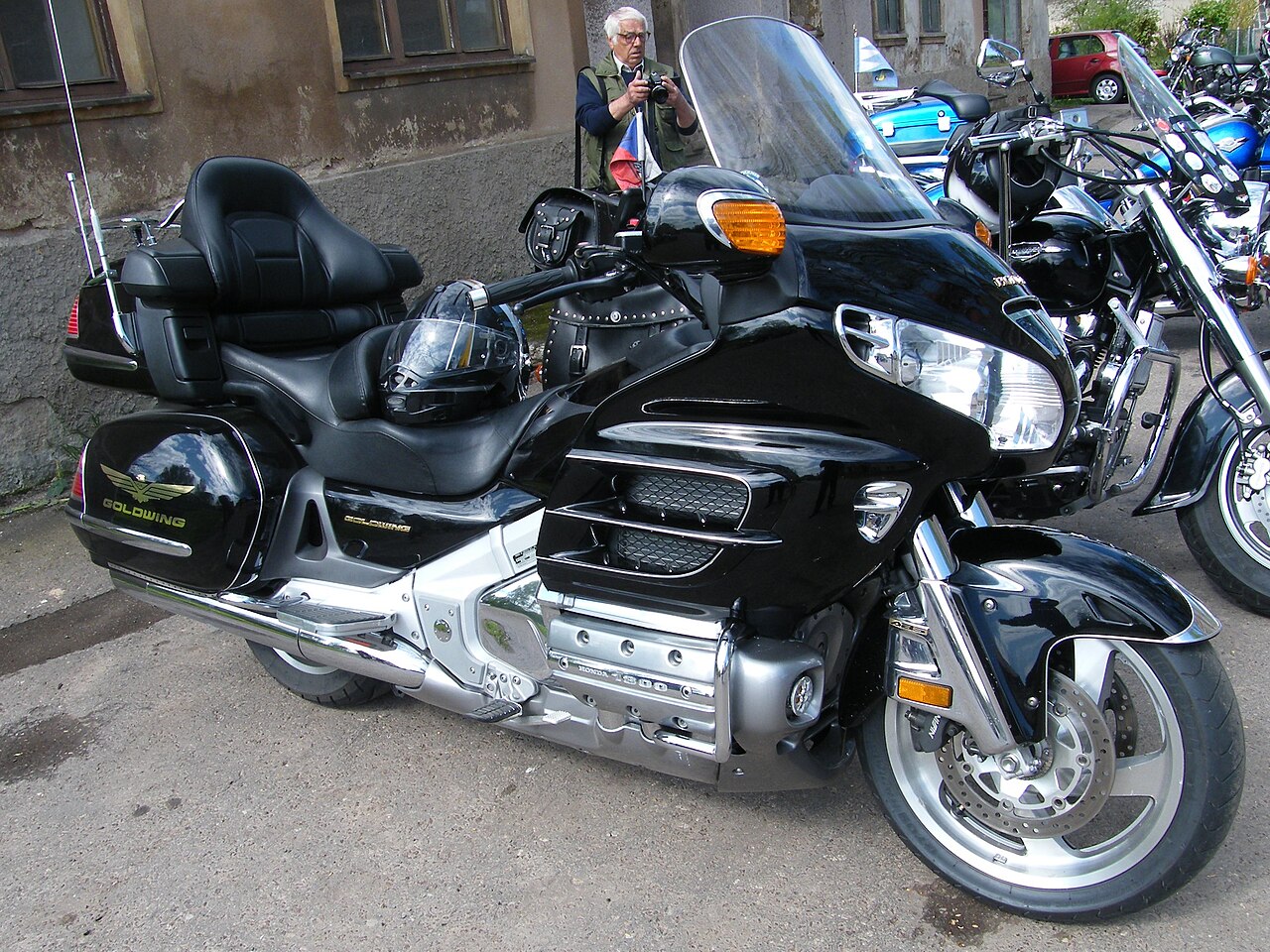
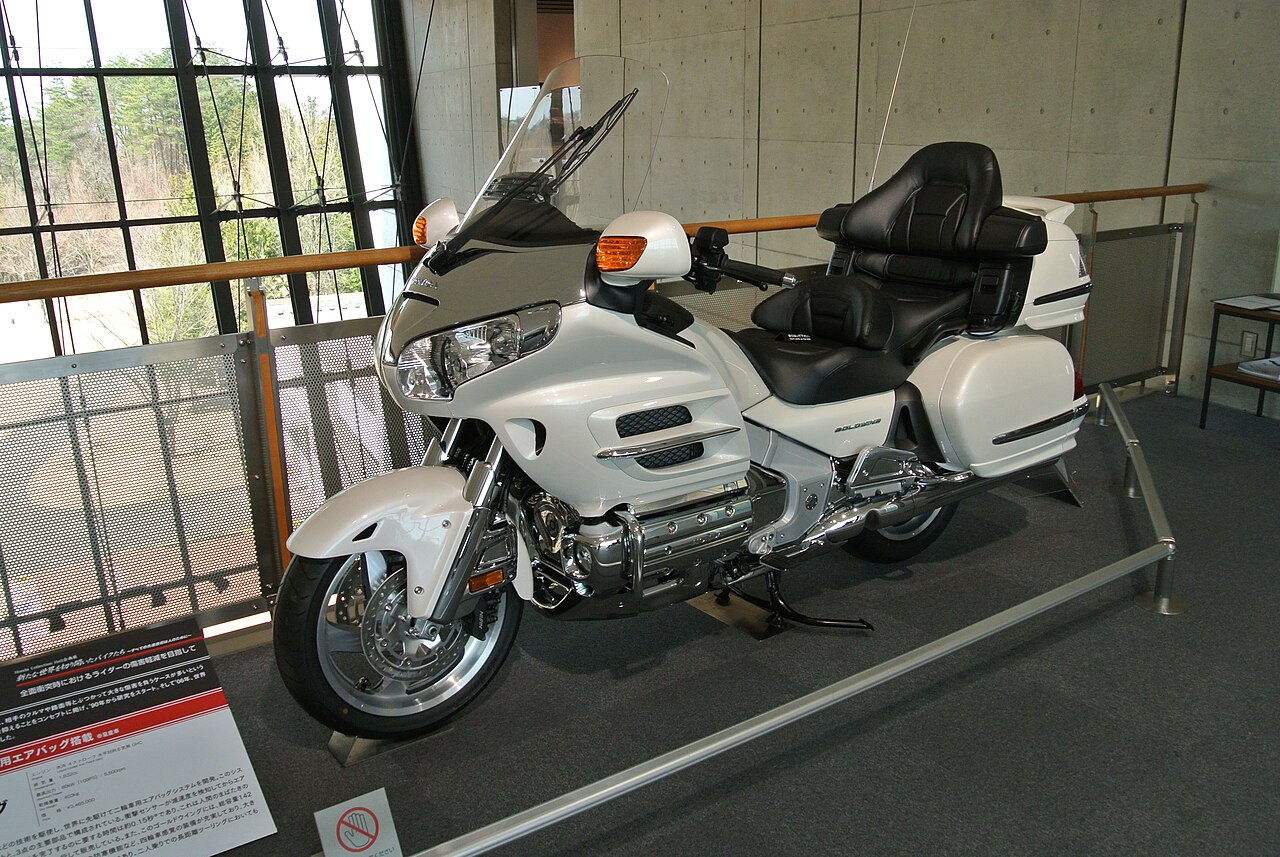
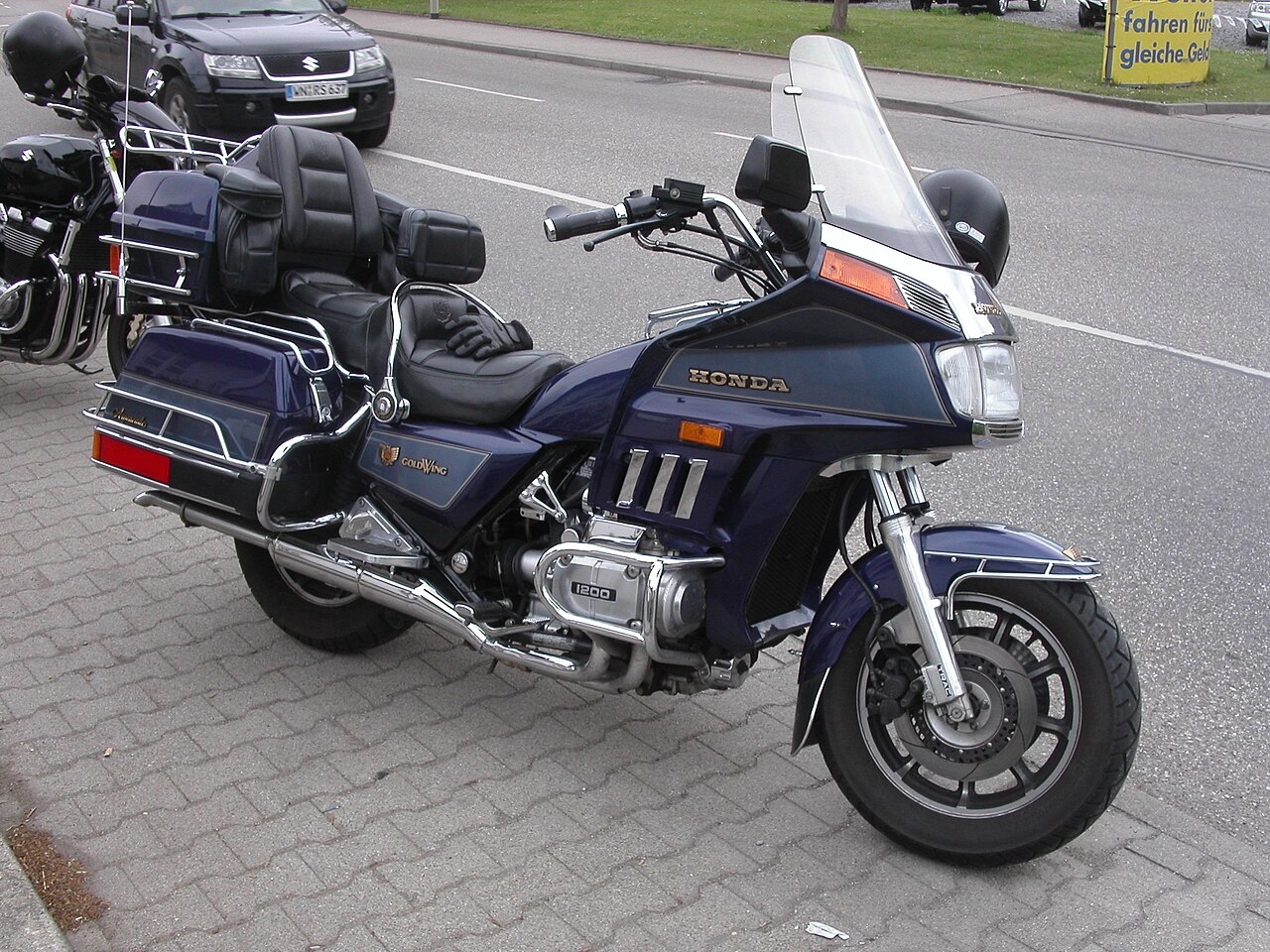
The GL1000's layout became the defining Gold Wing architecture: a liquid-cooled flat-four SOHC engine paired with a gear-driven generator that contra-rotated to cancel the engine's torque reaction. The cylinder blocks and crankcase were integral, and the transmission sat beneath the crankcase to keep the unit-construction powertrain as short as possible. Final drive was by shaft, eliminating the chain maintenance that plagued competitors. The 1974 Gold Wing was the first Japanese production motorcycle to feature a water-cooled four-stroke engine, drawing on technologies from both earlier motorcycle and automotive designs. Over the decades, displacement grew from the original 999 cc flat-four in 1975 to a 1,832 cc flat-six by 2001. The 2012 model added anti-lock braking, cruise control, an electrically assisted reverse gear, an optional airbag, a heated fairing, adjustable windscreen, panniers, trunk, pillion backrest, satnav, and a six-speaker audio system with MP3 and iPod connectivity.
Legacy and Production Journey
More than 640,000 Gold Wings were sold worldwide, the vast majority in the United States. From 1980 until 2010, the bikes were assembled in Marysville, Ohio, making them a distinctly American-manufactured product for three decades. When motorcycle production at that plant ceased, no Gold Wings were built for the 2011 model year; manufacturing resumed in Kumamoto Prefecture, Japan, using tooling physically transported from the Ohio facility. The Society of Automotive Engineers of Japan recognized the 1974 GL1000 as one of their 240 Landmarks of Japanese Automotive Technology. Through 2012, Honda GL models had appeared eighteen times on Cycle World's list of Ten Best bikes. Though other manufacturers produce touring motorcycles, none has matched the Gold Wing's sustained popularity across four decades of continuous evolution.
Common Misconceptions (Editorial)
Some assume the Gold Wing was sold from the start with its trademark fairing and luggage, but the original 1975 GL1000 was introduced without either, creating an aftermarket opportunity. Others might think the "dummy fuel tank" was purely cosmetic, but it actually housed the radiator expansion tank and electrical components, while the real fuel tank was under the seat.
Why It Matters (Editorial)
The Honda Gold Wing matters because it helped define long-distance touring as a mainstream motorcycling experience, combining comfort, reliability, and innovation over nearly five decades. Its enduring popularity, with over 640,000 units sold, reflects a commitment to engineering refinement—from the first water-cooled Japanese production engine to modern amenities like an optional airbag—that keeps riders coming back for more.
Gallery
Frequently Asked Questions
What is the Honda Gold Wing?
It is a long-running line of large touring motorcycles produced by Honda, purpose-built for comfortable long-distance riding. The series debuted in 1974 and quickly became a defining name in the over-750cc touring category.
When and where was the Gold Wing first introduced?
Honda revealed the motorcycle at the Cologne Motorcycle Show in October 1974, after generating press buzz back in September of that year. The first model year for retail sales was 1975.
What technical features set the Gold Wing apart from other touring bikes?
The series is built around a horizontally opposed (flat) engine paired with a shaft drive, a combination Honda chose to deliver smooth, low-vibration power with minimal chain or belt maintenance over thousands of miles.
How many Gold Wings have been sold in total?
Across every model generation, Honda has shipped more than 640,000 Gold Wings, with the United States accounting for the largest share of those sales.
Where are Gold Wing motorcycles assembled today?
Between 1980 and 2010 the bikes were put together at Honda's plant in Marysville, Ohio. Since 2011, production has been handled in Kumamoto Prefecture, Japan.
More in Iconic Motorcycles 1-20
Spotted an error? Know more?
This is a living reference — every entry is fact-audited, and reader corrections feed straight into our audit queue. Suggest an edit · See this site's audit record